
Have you ever stood at the pharmacy counter, heart racing, just waiting for the total?
Then the pharmacist says the price, and your heart just sinks.
I see this “pharmacy counter shock” almost every single day in my clinic. It’s a heavy moment.
As a doctor, it breaks my heart to see that look in a patient’s eyes that instant shift from “Will this medicine help me?” to “How will I afford this and my groceries?”
If you’ve ever felt that panic, please take a deep breath. You are not alone.
The truth is, you don’t always have to pay that scary sticker price. There are real, honest ways to bring those costs down.
Today, I’m sharing the “insider” secrets I give my own patients to help them save.
The Generic Secret is About Being Smart
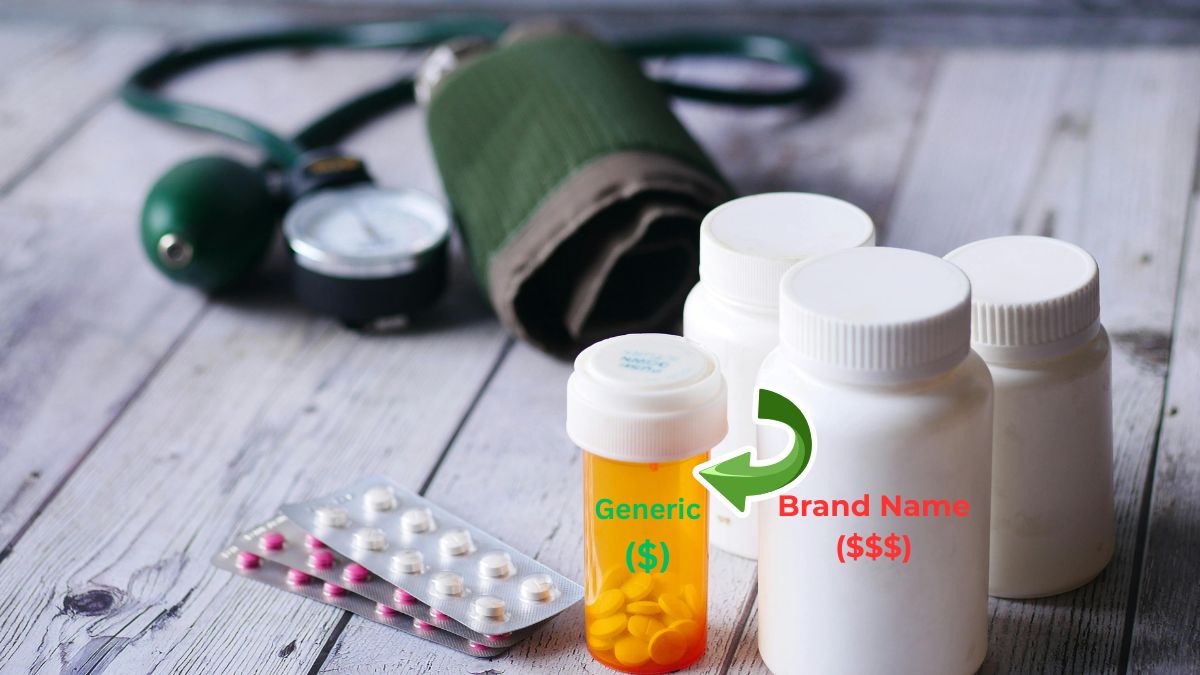
Let’s talk about the biggest money-saver first: Generics.
I hear this all the time in my office: “But Doc, is the generic version actually as good? I don’t want to risk my health just to save a few bucks.”
My answer is always a loud, medically-backed YES.
Think of it this way: Buying a brand-name medicine is often like buying a designer bottle of water when the tap water is perfectly pure and safe.
The FDA has very strict rules. A generic drug must have the exact same active ingredient as the expensive brand-name one. It has to work just as fast and be just as effective.
When you switch to a generic, you aren’t “settling” for something lower quality.
You are simply refusing to pay for the fancy colorful box and those billion-dollar TV commercials. This one simple switch can often cut your bill by 80% or even 90%.
That is a life-changing difference for your wallet.
Be Your Own Advocate
Here is a little secret: Sometimes, we doctors prescribe a brand name just because it’s the one we see in medical journals or the one that’s easiest to remember. We are humans too!
My Advice:
Next time you are sitting in that clinic chair, don’t be shy.
Ask your doctor: “Is there a generic version of this?”
Or better yet, ask: “Is there a therapeutic alternative that might be cheaper on my insurance?”
A “therapeutic alternative” is just a fancy way of saying a different drug in the same family. It does the same job but often costs much less.
It is a 10-second question that can save you hundreds of dollars. Your doctor is there to help you, not just with your health, but with your peace of mind too.
Did You Know You Could Get Medicine for Free?

This is the one thing that surprises my patients the most.
Many people don’t realize that drug companies actually have “charity” programs. They are called Patient Assistance Programs (PAPs).
While these programs are great, remember that starting in 2026, there is also a new Medicare Part D $2,000 out-of-pocket cap that will provide even more relief for high drug costs
These big companies make billions. Sometimes, they set aside a portion of their medicine for people who truly cannot afford the out-of-pocket costs.
If you have a limited income or your insurance doesn’t cover a specific drug, you might qualify to get your medicine for $0. Yes, completely free.
In 2026, new unified programs like TotalAssist are making it even easier for patients to apply and stay on their treatment without the paperwork headache.
If you are struggling, don’t just walk away from the pharmacy. Ask about these programs—it could change your life.
How to find them:
You don’t need a lawyer or a special agent. You can simply go to a website like NeedyMeds or check the drug manufacturer’s own website.
My Advice:
If you are struggling, tell your doctor. I often keep a list of these programs in my desk.
We can help you with the paperwork. It’s a bit of a “secret door” in the medical world, but it’s one that is always worth trying to open.
The “Magic” of Discount Apps (GoodRx & Friends)
Now, let’s talk about something you can do right from your phone. Have you ever noticed that the price of milk is different at two different grocery stores? Well, pharmacy prices are the same way!
One pharmacy might charge $50 for a pill, while the one just across the street charges $15.
It sounds crazy, but it’s true. This is where apps like GoodRx, SingleCare, or WellRx come in.
These aren’t insurance plans. They are like “digital coupons.”
You just search for your medicine on the app, show the “coupon” on your phone to the pharmacist, and boom—the price drops.
A Real Story from My Clinic:
I once had a patient whose insurance wanted $200 for a skin cream.
We looked it up on a discount app together, found a coupon, and she walked out paying only $35. She almost cried with relief.
Doctor’s Tip:
Always, always compare. Even if you have insurance, sometimes these discount “coupons” are actually cheaper than your insurance co-pay!
It only takes 30 seconds to check, and those 30 seconds could save you a week’s worth of grocery money.
Switch to a 90 Day Supply to Save Time and Money
Most of us are used to getting a 30-day supply of our pills.
You go to the pharmacy, pay your co-pay, and then you have to go back again in just four weeks. It’s a constant cycle.
But here is a little secret: Asking for a 90-day supply can save you a lot of money.
Think about it this way: Every time you “fill” a prescription, your insurance or the pharmacy might charge a fixed co-pay or processing fee.
If you buy three months at once, many insurance plans only charge you for two co-pays instead of three. You essentially get one month free.
Plus, it saves you gas money, reduces trips to the pharmacy, and ensures you never run out of your essential meds.
Doctor’s Tip:
Ask your doctor to write the prescription for 90 days instead of 30.
Most insurance plans, especially Medicare, love this because it’s cheaper for them too. It’s a “win-win” that keeps your medicine cabinet full and your wallet a little heavier.
Don’t Be Afraid to Shop Around for Better Prices
I know we all love our local pharmacists. They know our names and our families.
But sometimes, that loyalty can be expensive for your wallet.
Large stores like Costco, Walmart, or Sam’s Club often have their own “Generic Value Lists.” On these lists, some essential medicines are as cheap as $4 or $10 for an entire month—even if you don’t have insurance!
In most states, you don’t even need a Costco membership to use their pharmacy. You can just walk in and save.
If your current pharmacy is charging you a high price, it’s worth a 5-minute phone call to a nearby big-box store to compare. Those few minutes could save you $50 or more every single month.
My Advice:
Once a year, take a list of your medicines and call three different pharmacies.
Ask them, “What is your cash price for these?” You might be shocked at the difference. A 5-minute phone call could save you enough for a nice dinner out.
Saving money starts with choosing the right plan at the right time. Avoid the most common Medicare enrollment mistakes to ensure you don’t face unnecessary penalties.”
A Final Note from My Clinic to Your Home
If you are reading this and feeling overwhelmed, please remember one thing: Your health is more important than any bill.
I have seen patients stop taking their heart medicine or their insulin because they were too embarrassed to say they couldn’t afford it. Please, never do that.
As doctors, we are here to help you heal, not just write papers. If a medicine is too expensive, tell us. There is almost always another way, a cheaper pill, or a program that can help.
Saving money on prescriptions isn’t just about being “frugal.” It’s about making sure you can stay healthy for your kids, your grandkids, and yourself without the constant stress of “How much will this cost?”
Take these tips, talk to your doctor, and take control of your health. You’ve got this!
Frequently Asked Questions (FAQs)
Are generic drugs really as safe and effective as brand-name versions?
Absolutely. According to the FDA, generic drugs are required to have the same active ingredients, strength, and safety profile as their brand-name counterparts.
They work the same way in the body; the only significant difference is the much lower price tag.
Should I split my pills or skip doses to make my prescription last longer?
No, you should never alter your dosage without consulting your doctor.
Skipping doses can lead to treatment failure or serious health complications. If costs are a barrier, talk to your healthcare provider about switching to a more affordable therapeutic alternative instead.
What is “Therapeutic Substitution,” and is it a safe way to save money?
Therapeutic substitution involves switching to a different, lower-cost medication that belongs to the same drug class and treats the same condition.
It is a very common and safe practice, provided it is managed and approved by your prescribing physician.
Can I get financial help directly from the drug manufacturers?
Yes, many pharmaceutical companies offer Patient Assistance Programs (PAPs).
These programs provide free or deeply discounted medications to patients who meet certain income criteria. You can check the manufacturer’s website for the specific drug you are taking to see if you qualify.
Is it better to use a prescription discount card (like GoodRx) or my Medicare insurance?
It depends on the drug. Sometimes, the cash price using a discount card is actually lower than your insurance co-pay.
Always ask your pharmacist to compare both prices at the counter so you can choose the most cost-effective option.
About the Author
Dr. Neelam | Healthcare Advocate
Dr. Neelam is a medical professional specializing in Medicare and prescription affordability. She focuses on helping patients navigate the healthcare system to find low-cost medication solutions and financial assistance programs. Her mission is to ensure no patient has to choose between their health and their budget.
Disclaimer:
This article is for informational purposes only and does not constitute medical advice. Always consult with your healthcare provider or pharmacist before making any changes to your medication or treatment plan.

Dr. Neelam Tahir is a dedicated medical professional (MBBS) with a passion for helping seniors navigate the complex world of Medicare. With years of clinical experience, she specializes in simplifying healthcare benefits, from Part B givebacks to healthy food allowances. Her mission is to ensure that every senior has access to the expert guidance they need to live a healthy and financially secure life