
Recognizing the early signs of dehydration is essential for keeping your family healthy. We all know water is essential, but let’s be honest, life gets busy.
Between running errands, keeping up with work, or managing a household, drinking enough water often slips to the bottom of our daily to-do list.
Here is the tricky part, dehydration doesn’t affect everyone the same way.
A toddler who hasn’t had enough water won’t show the same warning signs as an adult after a workout, or a senior resting at home.
Whether you are looking out for your children, taking care of your own health, or checking in on aging parents, here is what you need to know about keeping every member of your family hydrated.
Why Hydration Changes as We Age

Our bodies need water to keep everything running smoothly, but our fluid needs naturally shift over time. In my clinical practice, I often see how different age groups handle hydration:
Young Children & Toddlers:
Kids lose fluids quickly because they’re always running around, playing, and using up energy. Most of the time, they don’t stop to drink water until they’re already really thirsty.
Adults (Ages 18–64):
Adults often get so caught up in busy schedules, stress, work, workouts, and endless cups of coffee that they forget to drink enough water.
Seniors (Ages 65+):
For seniors, the body doesn’t send strong thirst signals anymore. That means you can be low on fluids without even feeling thirsty. Plus, common medicines, like blood pressure pills, can make you lose extra water.
How Much Water Do You Really Need Each Day?
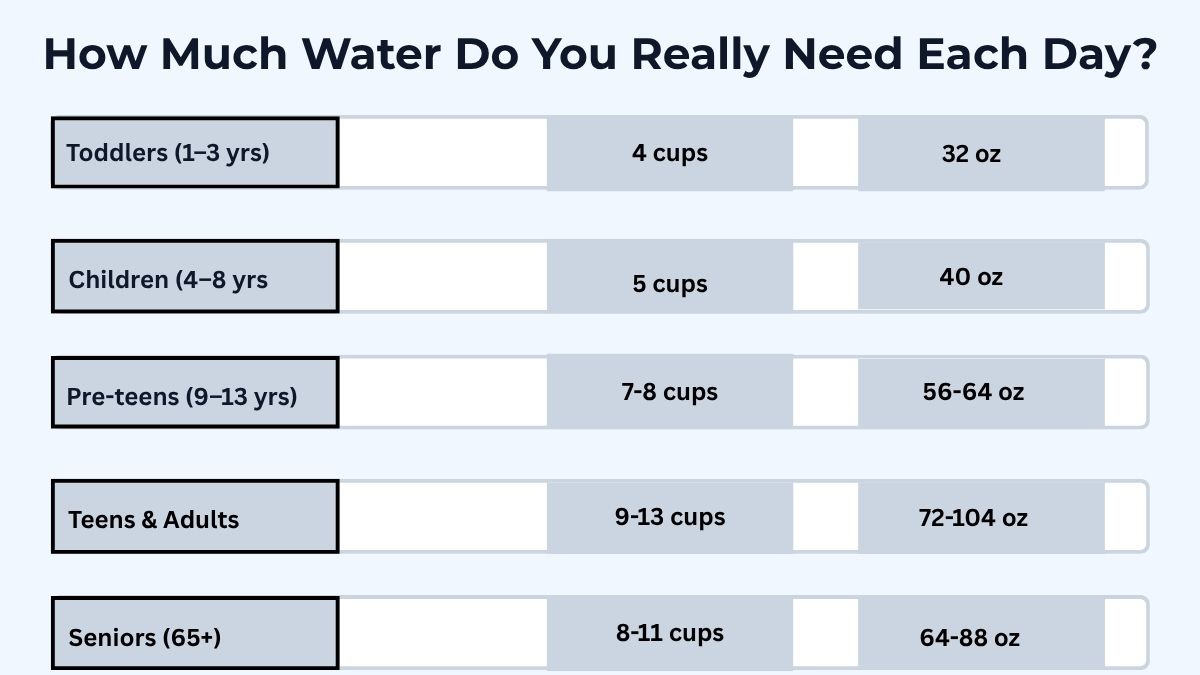
Forget the old “8 glasses a day” rule—it’s too generic. Your daily fluid needs depend on age, lifestyle, and health. Fluids don’t just come from plain water; they also include healthy drinks and water‑rich foods like fruits and veggies. Here’s a simple breakdown:
- Toddlers (1–3 years): Around 4 cups (about 32 oz)
- Children (4–8 years): About 5 cups (40 oz)
- Pre‑teens (9–13 years): 7–8 cups (56–64 oz)
- Teens & Adults: 9–13 cups (72–104 oz)
- Seniors (65+): 8–11 cups (64–88 oz)
Doctor’s Note:
If you have heart failure or kidney conditions, always follow the exact fluid limits prescribed by your physician.
7 Subtle Signs of Dehydration (By Age Group)
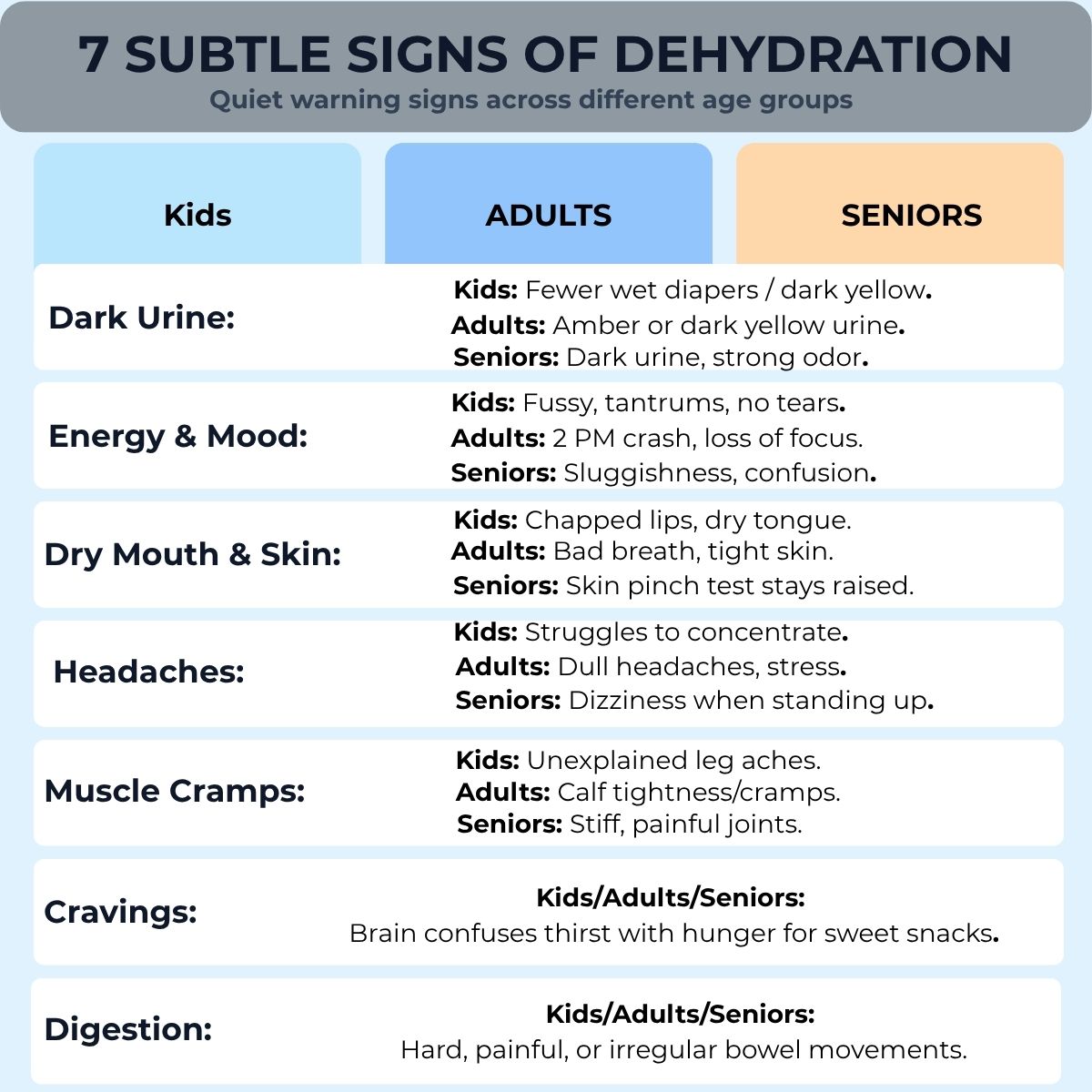
In my practice, I always tell patients that severe dehydration is obvious, but it’s these quiet, daily signs that sneak up on us. Here is what I advise families to watch out for:
1. Dark-Colored Urine
Bathroom habits reveal hydration levels. Pale yellow urine means you’re hydrated, while dark yellow or amber signals the need for water. For kids, fewer wet diapers or long gaps without bathroom use are red flags.
2. Sudden Energy Dips & Mood Swings
Kids may suddenly get fussy, cry without tears, or throw tantrums during playtime. Adults often hit that “2 PM wall” where focus disappears and energy crashes. Seniors may feel unusually sluggish or too tired to handle routine tasks.
3. Dry Mouth & Skin Changes
Children often show chapped lips or a dry tongue. Adults may notice persistent bad breath and tight skin. Seniors can test hydration by gently pinching the back of the hand—if the skin stays raised, the body needs fluids.
4. Irritability & Headaches
When the body lacks water, blood flow to the brain slows down. Children struggle to concentrate on schoolwork and get frustrated easily. Adults experience dull headaches or feel stressed over small issues. Seniors may notice mild confusion, memory slips, or dizziness when standing up.
5. Muscle Cramps & Stiffness
Muscles require water and salts to function smoothly. Adults may feel sudden leg cramps or calf tightness during workouts or at night. Seniors often experience stiff joints, since cartilage needs water to stay cushioned.
6. Craving Sweets or Feeling Hungry
The brain sometimes confuses thirst with hunger. Kids, adults, and seniors alike may reach for snacks when what they really need is water. A single glass often makes the craving disappear.
7. Stomach Upset & Constipation
Across all ages, dehydration slows digestion. From toddlers starting solid foods to older adults, low water intake can lead to hard, painful, and irregular bowel movements.
5 Easy Ways to Keep the Whole Family Hydrated
Here is the five ways:
Flavor Your Water Pitcher
Adding slices of cucumber, lemon, or strawberries to a cold water pitcher makes plain water more fun. Kids enjoy the colors, and the refreshing taste encourages the whole family to drink more.
Eat Hydrating Foods
Snacks like watermelon, oranges, berries, celery, and even warm soups are packed with water. Including these foods in daily meals is an easy way to boost hydration without relying only on drinks.
Set Water Anchors
Make hydration part of your routine. Drink one glass when you wake up, another with every meal, and a small glass before bedtime. These simple “anchors” turn drinking water into a daily habit.
Fun Water Bottles for Kids
Children are more likely to drink water when it feels exciting. Let them choose colorful bottles with straw lids—it makes hydration playful and personal.
Sip Slowly
Instead of gulping down a large bottle at once, take small sips throughout the day. This helps your body absorb fluids better and keeps you feeling refreshed.
Final Thoughts from Dr. Neelam
Hydration isn’t about forcing yourself to chug gallons of water all at once. It’s about building gentle, daily habits for your whole family.
Whether it’s keeping a fun water bottle for your kids, carrying a flask to work yourself, or taking small sips throughout the day as a senior,every drop counts toward protecting your health, energy, and longevity.
— Dr. Neelam (TheMedicareSafe.com)
Frequently Asked Questions (FAQs)
Do fruits and veggies help with hydration?
Yes! Watermelon, cucumbers, oranges, and strawberries are packed with water and are a delicious way to stay hydrated.
Do coffee and tea count toward daily water?
Yes, they do. While caffeine is a mild diuretic, coffee and tea still contribute to your daily fluids. Just balance them with plain water.
How much water should I drink every day?
It varies by age, activity level, and weather. Generally, adults need 9–13 cups (72–104 oz) daily, while kids and seniors need slightly less.
What are the early signs of dehydration?
Dry mouth, dark yellow urine, fatigue, and headaches are common hints. Kids may get fussy, while seniors might feel unusually sluggish.
Can you actually drink too much water?
Yes. Drinking extreme amounts can dilute your blood’s sodium levels (a condition called hyponatremia). Sip steadily and don’t overdo it.

Dr. Neelam Tahir is a dedicated medical professional (MBBS) with a passion for helping seniors navigate the complex world of Medicare. With years of clinical experience, she specializes in simplifying healthcare benefits, from Part B givebacks to healthy food allowances. Her mission is to ensure that every senior has access to the expert guidance they need to live a healthy and financially secure life